
Deck Resurfacing Cost: $15–$50 Per Sq. Ft. Hinges on Inspection
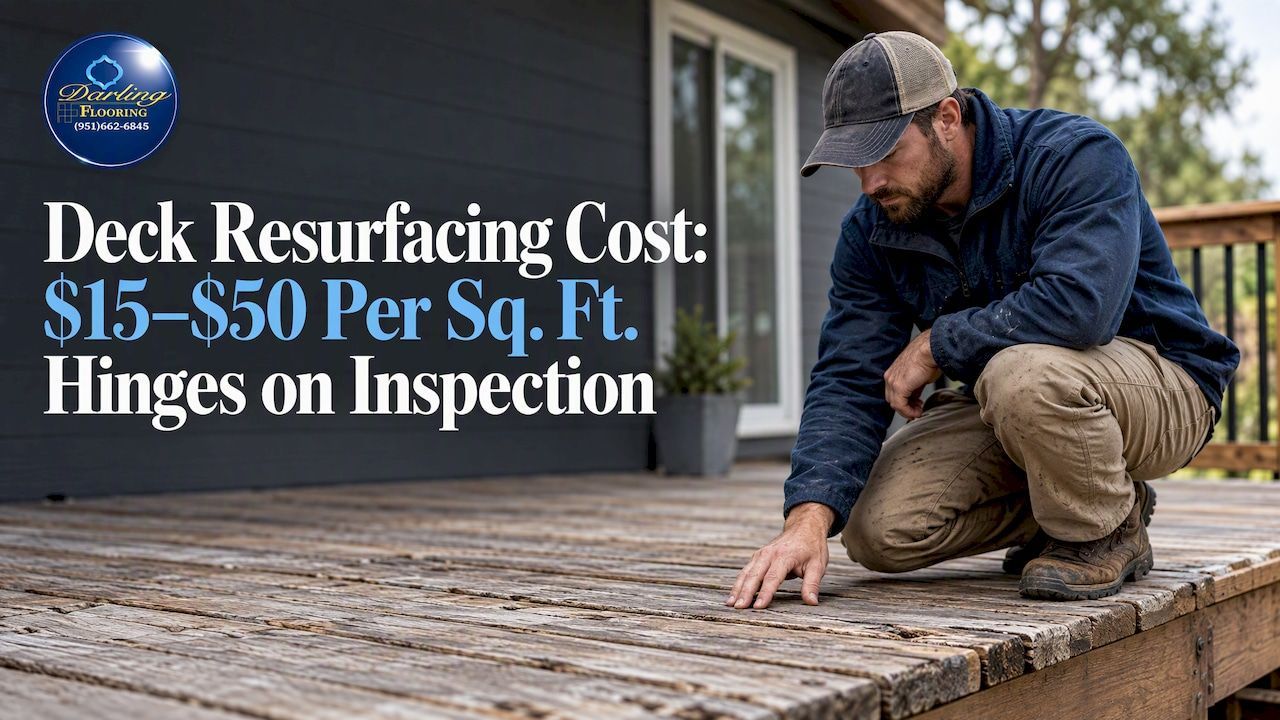
Deck resurfacing cost usually runs about $15 to $50 per square foot, and the condition of the structure underneath is the biggest reason quotes differ. Sound framing keeps the job a surface project, while rot or weak joists turn it into a repair bill. Measure your deck and book an inspection before you trust any number.
TL;DR:
- Material prices vary widely: pressure treated wood runs $8 to $20 per square foot, while composite ranges from $12 to $45.
- DIY refinishing can cost $300 to $900, but limit it to cleaning, sanding, and staining; hire licensed professionals for framing, code work, or elevated decks.
- Railing repairs and board replacement can each add $500 to $4,000; significant structural repairs can exceed $10,000, so request itemized costs and address rot first.
- A 300 square foot deck works out to $4,500 to $15,000 at $15 to $50 per square foot, assuming sound framing and no major repairs.
Table of Contents
- What goes into the cost of resurfacing a deck
- DIY or hire a pro: what each route costs
- Prep steps and repairs that add to your quote
- Sample budgets for small, medium, and large decks
- How to get an accurate, comparable quote
- When resurfacing won’t fix the problem
- Why we start with the structure, not the surface
- Get a written deck quote from our team
- FAQ
- Sources
What goes into the cost of resurfacing a deck
Every resurfacing quote is built from three buckets: materials, labor, and prep. Understanding each one lets you read an estimate line by line and spot charges that are padded or negotiable.
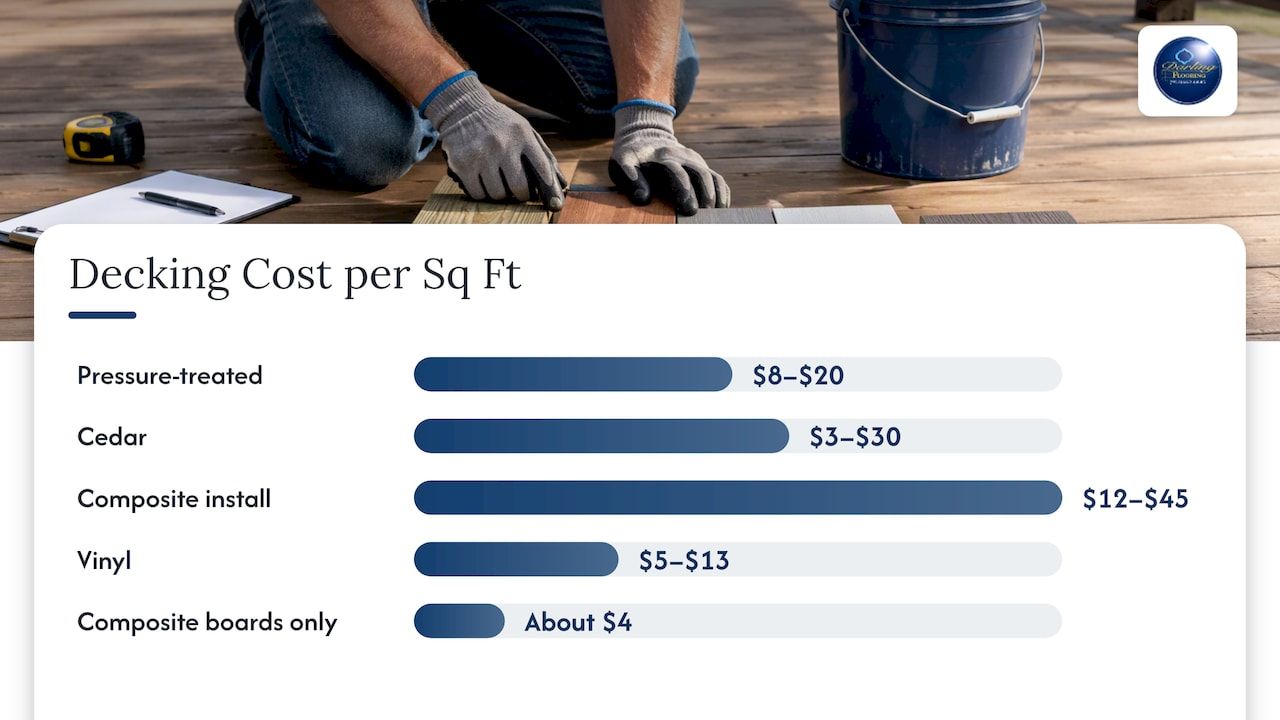
Materials set the base price. Installation price bands from This Old House’s decking comparison
put pressure-treated wood at $8 to $20 per square foot, cedar at $3 to $30, composite at $12 to $45, and vinyl at $5 to $13. The same source advises factoring long-term maintenance into the comparison, since upkeep can affect the overall cost of different materials. Basic composite boards can start around $4 per square foot for the boards alone, with premium lines costing more per square foot.
Labor is the second bucket. On deck projects in general, labor often accounts for 30 to 50 percent of the total, and permits and optional add-ons push totals higher. Labor rates also vary by region, and localized price examples such as a Saint Paul, Minnesota resurfacing estimate show how much the same job can differ from one market to the next. Seasonality matters too: contractors in colder climates are busiest in late spring and summer, so booking in the shoulder seasons can give you more scheduling flexibility.
Prep is the third bucket, and it is where surprises hide. Cleaning, stripping old finish, sanding, and repairing damaged boards all happen before a new surface goes down. A contractor who skips prep may quote low, but coatings and stains fail early when they bond to a dirty or crumbling surface.
Here is what typically shows up as a line item on a resurfacing estimate:
- Surface materials: boards, overlay panels, or coating products, priced per square foot.
- Labor: crew time for removal, installation, and finishing.
- Prep work: power washing, stripping, sanding, and fastener replacement.
- Repairs: replacing individual boards, railings, or damaged framing.
- Disposal and permits: hauling away old material, plus any local permit fees.
Resurfacing is not the same as refinishing, and the difference shows up on the invoice. Refinishing cleans, sands, and re-seals or re-stains the existing boards. Resurfacing replaces or covers the walking surface. Repair addresses damaged components. Replacement means rebuilding the deck. Each step up the ladder costs more, which is why an honest inspection comes first.
Cost to know: Angi puts resurfacing around $15 to $50 per square foot, and structural repairs can push a project well beyond that range.
A typical resurfacing job moves through inspection and quoting, material ordering, prep and repairs, installation or coating, and then drying or curing before furniture returns. Coatings and stains need suitable weather and enough time to cure before foot traffic. Contractor scheduling can also delay the start, so plan ahead rather than waiting for the first warm weekend.
DIY or hire a pro: what each route costs
The lowest quoted price is not always the least expensive option in practice. Angi reports that DIY refinishing can cost as little as $300 to $900, while professional refinishing averages $900 to $2,700. That gap looks like a clear win for DIY until you count your own time and the risks.
Basic restoration is within reach for many homeowners. Some DIY techniques for weathered decks cost $80 to $120 in basic materials and rentals, though your time and skill level change the real outcome. Cleaning, light sanding, and applying stain are the tasks most homeowners handle well.
Here is how the DIY path usually unfolds:
- Inspect every board and the framing for soft spots, loose fasteners, and rot.
- Rent or buy a power washer and clean the surface thoroughly.
- Let the deck dry completely, allowing the weather and conditions to guide how long that takes.
- Sand rough areas and replace any damaged boards.
- Apply stain, sealer, or coating in even coats, following the product’s cure times.
Hidden DIY costs catch people out. Equipment rental fees, disposal of old material, extra coats, and redoing a botched section can erase the savings. A rushed job on a deck with hidden damage can also hide a safety problem, such as a loose railing.
Hire a professional when the work goes beyond the surface. Angi’s guidance notes that licensed builders help ensure compliance with local building codes and reduce the risk of failed inspections or safety hazards. Structural repair, code-related work, and tall or elevated decks all belong on that list. The same source warns that significant structural repairs can push costs above $10,000, so a professional assessment before you start is cheap insurance.
Pro Tip: Pay for an inspection before buying a single can of stain. A short assessment of the joists and ledger tells you whether DIY is realistic or whether you are about to coat over a problem.
Prep steps and repairs that add to your quote
Most quotes grow after the contractor lifts the first board. Knowing the usual add-ons helps you plan a cushion and compare bids fairly.
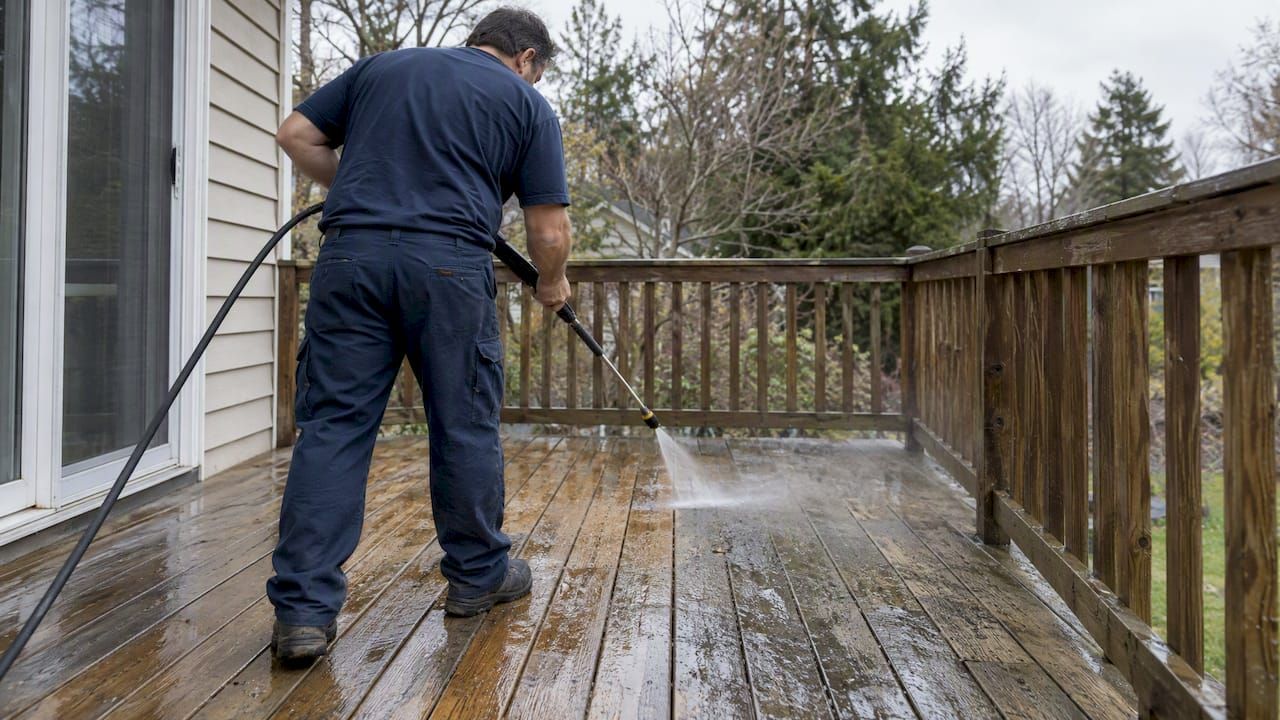
Prep work comes first. Power washing removes mildew and grime, stripping lifts failing paint or old stain, and sanding smooths the surface so new coatings bond properly. This Old House notes that professional treatments include deep cleaning, sanding, and specialized coatings. Skipping any of these to save money usually means paying again when the finish peels.
Repairs are the other driver. Angi lists ranges such as $500 to $4,000 for railing repairs and the same $500 to $4,000 band for board replacement. Where the damage sits matters as much as how much there is, so a single rotted board near a post can be a symptom of a bigger moisture problem.
These are common add-on items on deck quotes:
- Board replacement: soft, cracked, or split boards swapped before the new surface goes on.
- Railing repair: loose or wobbly posts and rails, which are also a safety issue.
- Rot and mildew treatment: cutting out decayed wood and treating the surrounding area.
- Pest-related work: termite or insect damage that has to be addressed before any finish.
- Fastener replacement: corroded screws or nails that would otherwise bleed through a coating.
Contractors usually present repairs in one of two ways: a lump sum folded into the overall price, or a line-item list with unit costs. Ask for the second. When repairs are itemized, you can stage the work, handling safety items and rot first and saving cosmetic upgrades for a later season. That approach keeps the budget manageable without leaving a hazard behind.
Moisture is worth treating while the deck is open. Poor drainage and water discharging onto decking accelerate decay; a guide to basement bathroom plumbing costs also stresses the importance of drainage. Redirecting a downspout away from your deck can protect a repair you have just paid for.
Sample budgets for small, medium, and large decks
Per-square-foot math is the fastest sanity check. Using the $15 to $50 per square foot resurfacing range from Angi as an illustrative multiplier, here is how the arithmetic scales across common sizes. These totals are worked examples built on that range, not quotes, and they assume a sound structure with no major repairs.
| Deck size | Square feet | Low estimate (at $15/sq ft) | High estimate (at $50/sq ft) |
|---|---|---|---|
| Small | 150 | $2,250 | $7,500 |
| Medium | 300 | $4,500 | $15,000 |
| Large | 500 | $7,500 | $25,000 |
Two things move your real number inside that spread. The first is material: choosing composite or premium boards from the upper bands listed earlier lands you closer to the top, while a coating over sound boards tends to sit lower. The second is repair scope. A single railing or board repair can add $500 to $4,000 on its own, and significant structural work can raise a project well past these totals.
Read the table as a starting frame, not a promise. A 300 square foot deck that needs only cleaning and a new coating will price very differently from a 300 square foot deck with a failing ledger board. That is exactly why the next step is to document your deck’s condition before you collect bids.
Practical steps to maximize resale ROI
Buyer appeal costs less than most owners expect. Stick to broad-appeal choices and skip anything that reads as one person’s taste.
- Choose a neutral palette of whites, warm grays and soft tones.
- Upgrade lighting and ventilation, which buyers notice immediately.
- Pick durable midrange surfaces over custom or exotic ones.
- Choose attractive stock fixtures instead of one-off designer pieces.
- Refinish where you can rather than replacing, which keeps costs down.
- Call an agent early to target upgrades to your local buyers.
The 2025 Remodeling Impact Report compares NARI cost estimates with REALTORS®’ estimated resale value for bathroom renovations. It is a useful reality check before you set a budget.
If you own a rental instead, investor-focused renovation advice leans even harder on durability and low upkeep.
Use value versus resale value: how we think about it
Spend on fixes and midrange updates if a sale is near. If you plan to stay long term, put accessibility and comfort first, because you collect that return every morning. The honest question is how much enjoyment you are willing to buy beyond what the market will repay. Our team offers tailored consultations, tile installation, shower builds and flooring work that help owners size a project to their resale goals. Weigh what you will enjoy against what you are likely to recoup, then decide.
— Jacob
How we help you get more from your bathroom remodel
We build and finish bathrooms for homeowners who want the work to hold up and the numbers to make sense. Start with a consultation, and we will help you shape a scope that fits your plans.
- Tile installation that handles water and wear
- Shower builds
- Flooring systems for bathrooms and the rooms around them
- Transparent estimates that separate demolition, materials and labor

Book an inspection or request your written quote online and we will walk you through the options.
FAQ
What is the cheapest way to redo a deck?
The cheapest route is usually cleaning and re-staining a structurally sound deck yourself. Angi puts DIY refinishing as low as $300 to $900, though hidden damage can raise that quickly.
How much does it cost to stain a 20x20 deck?
For a 20x20 deck, your total depends on the per-square-foot rate for prep and stain. Because staining is a refinishing task rather than full resurfacing, it generally costs less than the resurfacing range, and a written quote after inspection gives the real figure.
Can you resurface a pool deck?
Yes, pool decks can be resurfaced with coatings when the substrate is sound. Concrete pool decks need patching and proper prep first, and our guide on concrete patching explains why.
Are deck repairs covered by homeowners insurance?
Usually only when damage comes from a named peril in your policy, such as a storm, vandalism, or fire. Rot, decay, and wear-and-tear are typically excluded, so check your declarations page.



